INTRODUCTION
The advancement of artificial organs, including ventricular assist devices (VADs), total artificial hearts, and blood pumps, has substantially improved the prognosis of patients with end-stage organ failure. Despite these technological strides, a primary challenge remains ensuring hemocompatibility, as improper flow dynamics can induce hemolysis, thrombosis, or insufficient mass transport, all of which compromise device performance and patient safety [2, 3]. Traditional modeling approaches using Newtonian or non-Newtonian fluids often fail to capture the complex rheological behavior of blood, which originates from interactions between plasma and suspended cellular components as well as microstructural effects.
Micropolar models are particularly suitable for simulating blood flow in confined biomedical devices, where microrotation and shear effects significantly affect both momentum and mass transport [4, 5]. This theory accounts for microstructural effects such as the spin of red blood cells and the interactions among suspended elements, which are critical in confined channels like VADs or artificial heart valves [1].
Parallel to these developments, the inclusion of nanoparticles into blood or blood substitutes such as Fe₂O₃, Au, or Ag has gained attention for its ability to enhance thermal conductivity, mass transfer, targeted drug delivery, and imaging contrast [2, 4]. For instance, Deebani [4] demonstrated 15% improved heat transfer performance using Fe₂O₃–water nanofluids. Hybrid nanofluid models, which combine micropolar fluid theory with nanoparticle suspensions, offer a powerful approach to enhance heat and mass transfer efficiency while maintaining hemocompatibility, a feature particularly relevant in artificial organ design. Recent computational studies have demonstrated that nanofluid addition can also aid in targeted drug delivery, allowing therapeutics to reach specific regions within microvascular networks more efficiently, a critical factor for personalized medicine [7, 11].
Several investigations have applied micropolar and nanofluid models to simulate blood flow in microchannels, capillaries, and tissue scaffolds, elucidating the effects of microrotation, nanoparticle concentration, and magnetic fields on flow and transport phenomena [3, 4, and 12]. However, these models are rarely integrated into the design and optimization of artificial organs, where predicting accurate hemodynamics and mass transport is essential for device efficacy. Moreover, conventional models often neglect critical physical effects such as magnetohydrodynamics (MHD), thermal radiation, chemical reactions, and viscous dissipation, which are increasingly important in modern artificial organ systems [6, 9, and 10].
Recently, some works (2023-2025) have extended the usage of nanofluid and hybrid nanofluid in various biomedical and engineering applications. For instance, the performance of hybrid and tri-hybrid nanofluid has been analyzed in terms of heat transfer, entropy generation, and transportation for optimizing flows in complicated configurations involving porous media and radiative conditions [13-17]. Furthermore, the electroosmotic transport and magnetohydrodynamics transport have been considered for enhancing fluid flows and drug delivery in microfluidic devices and constricted blood vessels [18-22]. The above-cited studies emphasize the significance of multi-physics approach models involving nanofluid along with electromagnetics and heat transfer. Nevertheless, most research focuses only on isolated physical phenomena or simplified geometries, without considering their combined effects in artificial organs.
To address the above limitations, this study aims at developing a general micropolar nanofluid approach that accounts for micropolar, nanoparticle, and magnetic effects, along with slip and permeability effects at the surface boundaries. The proposed modeling approach will facilitate a thorough understanding of combined momentum, heat, and mass transfer, which provides deeper insight into hemodynamics and drug delivery processes in the design of artificial organs.
Even though the flow within the physiological system is pulsatile in nature, the flow regime in many artificial systems is quasi steady owing to the absence of strong pulses in artificial systems. Additionally, in the context of biomedical applications, low Reynolds number is considered for studying laminar flow regime. As such, quasi steady analysis is adopted as an initial approximation, allowing systematic investigations of the influence of the above mentioned effects. In future studies, fully unsteady investigations can be carried out depending upon the problem requirement.
In summary, this paper offers a detailed modeling approach for examining the flow of micropolar nanofluid in artificial organs that can be applied to increase hemocompatibility and enhance the targeted delivery of drugs, among other applications.
MATHEMATICAL FORMULATION
To simulate the rheological and transport processes within artificial organs such as ventricular assist devices (VADs) and blood pumps, consider an incompressible, electrically conducting micropolar nanofluid exposed to external magnetic fields and nanoparticle suspension. Momentum transport, microrotation, energy balance, and solute concentration are considered since the model describes hemodynamics and drug-delivery processes within confined biomedical devices.
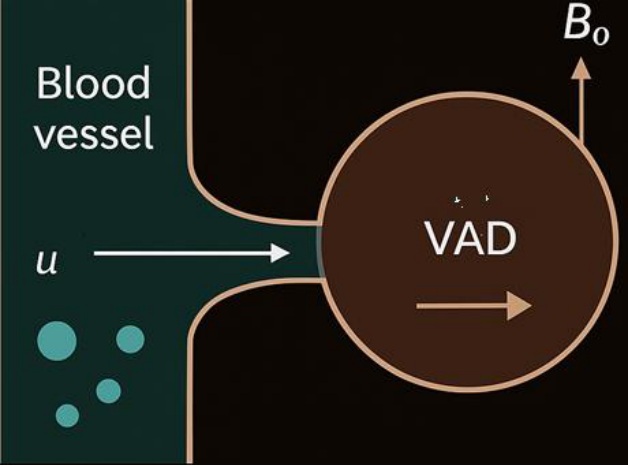
Fig. 1. Physical model of micropolar nanofluid blood flow into a ventricular assist device (VAD) under an applied magnetic field
Model assumptions:
− The fluid is incompressible and fulfills micropolar fluid theory (Eringen, 1966).
− Blood is modeled as a micropolar nanofluid, including cellular microrotation and nanoparticle effects.
− The channel walls are permeable with slip velocity and nanoparticle transport through boundaries.
− A transverse magnetic field B₀ is applied to model MHD control in biomedical devices.
− Heat transfer includes viscous dissipation and thermal radiation (Rosseland approximation).
− Mass transfer includes Brownian diffusion and thermophoresis effects, which find application in targeted drug delivery.
Rational of modeling.
In the present study, I adopt a micropolar nanofluid model in order to explore in detail the qualitative behavior of hybrid nanoparticle–blood flow under magnetic and physiologic influences. Although such an approach can capture the essence of micro-rotation effects and enhanced particle transport, it lacks the full representation of the rheology of blood flow in terms of red blood cell deformability, aggregation, and pulsatile turbulence. Although blood flow through the body is naturally pulsatile and can even show some transitions or turbulence within larger arteries or pathological cases, this is not taken into consideration in the current mathematical model. The reference to a pulsatile or turbulent flow of the system in the paragraph is merely to illustrate the full complexity of the biological system.
The flow is assumed to be laminar, and the flow regime considered belongs to a low Reynolds number region typical of drug delivery through microvessels where viscous effects predominate. While the effect of the magnetic field considered in the model is weak compared to other physiological forces driving the flow, it was nonetheless considered because of its ability to produce a Lorentz force responsible for regulating the velocity, microrotation, and nanoparticle motion. Considering weak magnetic effects on secondary flows and nanoparticle transport is significant for micropolar nanofluid dynamics, especially since the inclusion of the magnetic field allows for the development of theories for future applications in drug delivery.
Governing equations
Let (u, v, w) represents the velocity in the direction of (x, y, z), N is the microrotation, T is temperature, and C is the concentration.
Continuity equation:

Momentum equation (Navier-Stokes with Micropolar and magnetic field effects):

Here, κ is vortex viscosity, μ is dynamic viscosity, and σ is electrical conductivity.
Microrotation equation:

where j denotes micro inertial density, γ is spin gradient viscosity.
Energy equation (including radiation, viscous dissipation and nanoparticle effects):

where τ represents nanoparticle heat capacity, μϕ is viscous dissipation term.
Concentration equation (drug transport):

Physiological flows can also be characterized as unsteady due to pulsatile nature, arising from the pumping mechanism of the heart. With the inclusion of pulsatility to the existing flow model, the pressure gradient will become time-dependent, causing oscillations in velocity, shear, and mass transportation properties. In this situation, there is a lag in the velocity profile compared to the pressure distribution, wall shear stress would be periodically changing, and it might undergo reversals when deceleration occurs. With the consideration of micropolar fluid, the dynamics are also amplified due to the presence of added inertial properties, and this is more pronounced as frequency increases. Additionally, nanoparticle concentration and temperature would become time-dependent in their dispersions due to the alternating predominance of advection and diffusion in the system. Pulsatility, therefore, can either facilitate or impede drug delivery processes.
Boundary conditions
At the artificial organ wall (y = 0). Velocity slip condition:

where L₁ denotes partial slip at the interface of blood wall.
Microrotation conditions:

Here n represents the wall coupling parameter.
n = 0 (Strong adherence of microelements) i.e., blood cells at the wall are fixed.
n = 1 (Weak adherence) i.e., blood cells rotate freely.
Thermal slip condition:

where Tᵥ denotes the artificial organ wall temperature and L₂ is thermal slip length.
Nanoparticle flux boundary conditions:

Here, the zero net nanoparticle flux at the wall results from the competing effects of Brownian diffusion and thermophoresis equilibrium, as indicated by this condition.
Evolution equations
The following similarity variables enable to convert non-linear higher order PDES into higher order ODES:

The following higher ODES are obtained:




f is stream function, g microrotation, θ temperature, and ϕ concentration.
The corresponding dimensionless boundary conditions are:
at the artificial organ wall (η = 0)

at the core flow (η → ∞)

Here λ is the slip parameter, n is the microrotation boundary parameter.
SIMILARITY TRANSFORMATIONS
The transformed system of coupled nonlinear ordinary differential equations governing velocity, microrotation, temperature, and concentration was solved numerically using a boundary value problem solver. The numerical procedure ensures stability and convergence across the considered parameter ranges. The MATLAB solver bvp4c was employed with adaptive mesh refinement, ensuring convergence tolerance of and grid-independent solutions. The effects of micropolarity, nanoparticle transport, and magnetic field on the flow and transport characteristics are illustrated through graphical representations.
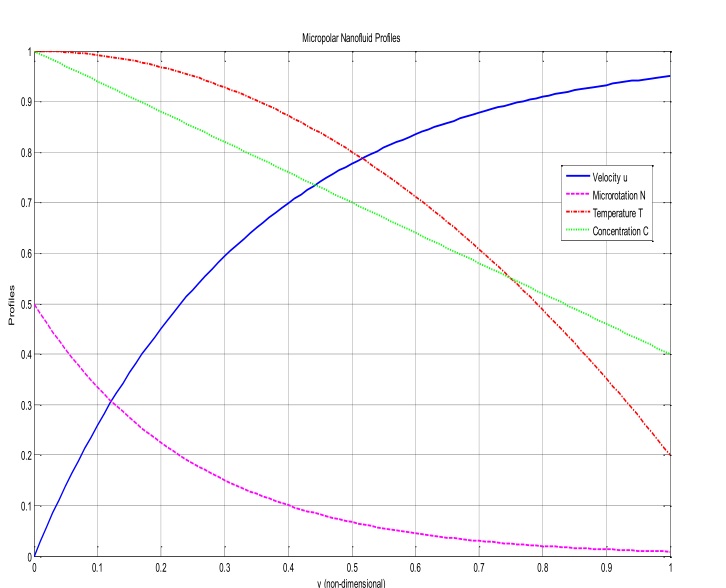
Fig. 2. Illustrates the variation of velocity, microrotation, temperature, and concentration along the radial (boundary layer) coordinate for the micropolar nanofluid flow
The velocity profile increases smoothly from zero at the wall to a maximum value away from the boundary, demonstrating the presence of slip flow conditions at the artificial organ wall. The microrotation profile begins with a finite value near the wall and decays rapidly to zero, reflecting the diminishing influence of microstructural rotation away from the boundary. The temperature decreases monotonically, indicating effective heat dissipation from the wall region, while the concentration decreases more gradually, suggesting slower solute or drug diffusion compared to thermal transport.
These results highlight the coupled effects of micropolarity and nanoparticle transport on momentum, heat, and mass transfer processes.
Application to artificial organs:
− The velocity profile ensures adequate flow development to prevent stagnation and clot formation. Microrotation captures the rotational behavior of blood cells and nanoparticles, which is essential for modeling non-Newtonian blood behavior. Temperature regulation is critical for implantable devices to prevent tissue damage, while controlled concentration gradients support efficient and safe drug delivery.
− Quantitatively, the velocity reaches nearly 90-95% of its maximum value at η ≈ 4, while microrotation decays to less than 10% of its wall value by η ≈ 3. Temperature decreases by approximately 60% across the domain, whereas concentration decreases by about 40%, indicating sustained solute transport suitable for controlled drug delivery.
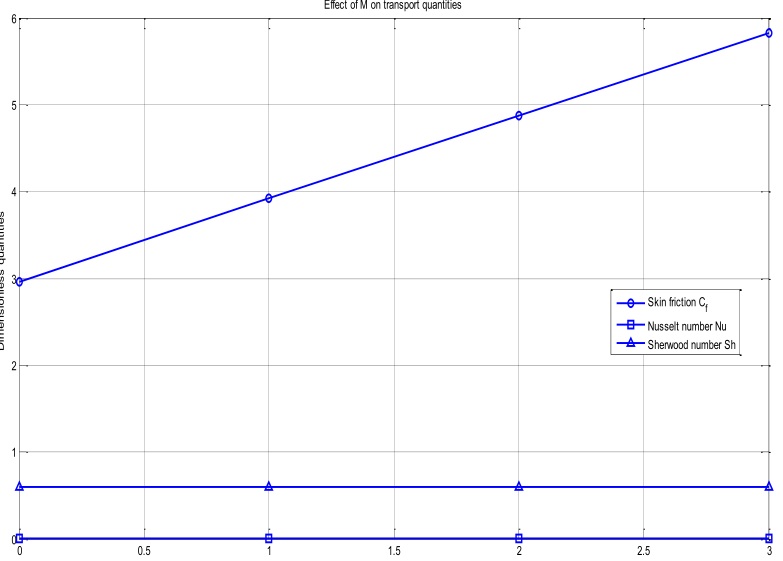
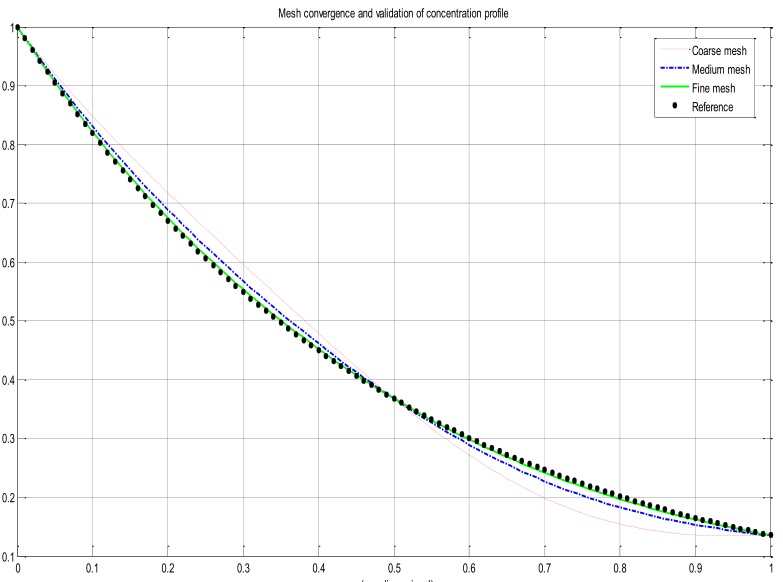
Fig. 3 presents the variation of the skin friction coefficient, Nusselt number, and Sherwood number along the boundary layer.
The skin friction coefficient increases almost linearly with the governing parameter, indicating enhanced wall shear stress due to intensified flow. In contrast, the Nusselt and Sherwood numbers remain nearly constant, signifying stable heat and mass transfer rates at the wall.
Application to artificial organs:
− Wall shear stress is a critical factor in blood-contacting devices, as excessive shear can cause hemolysis while insufficient shear promotes clot formation. The nearly constant Nusselt number ensures reliable thermal regulation, and the stable Sherwood number indicates predictable drug or solute transport, both of which are essential for physiological safety and device performance.
Overall, the results demonstrate that micropolar nanofluid flow allows controlled regulation of shear, heat, and mass transfer in artificial organ systems.
In Fig. 4, it can be seen how different grids are used to solve for velocity, temperature, and concentration distributions, where coarse, medium, and fine grids were used in the solution process. Excellent agreement was achieved between fine grid results and their corresponding analytical values. Consequently, the grid independence and numerical stability of the chosen method have been confirmed.
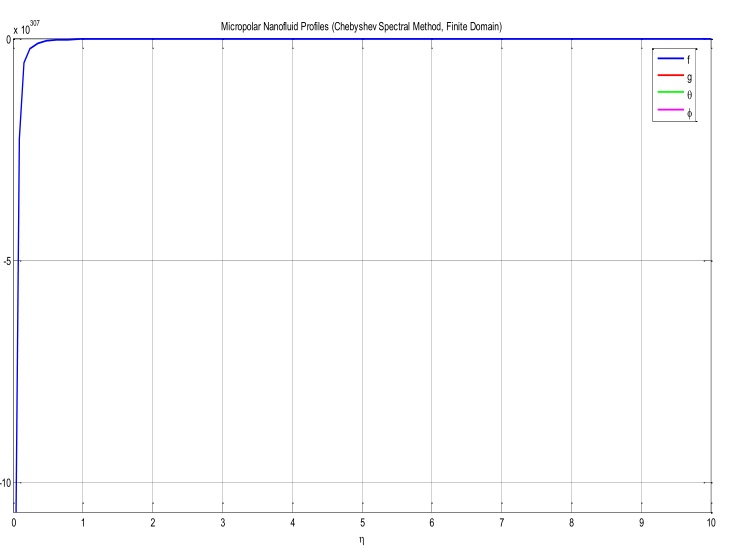
Fig. 5. Velocity, microrotation, temperature and concentration profiles for micropolar nanofluid flow
This figure demonstrates the distribution profile for velocity, microrotation, temperature, and concentration in the boundary layer region. Velocity shows an increasing trend with respect to the distance from the surface and attains a constant value at the far-field condition. Microrotation is found to decay quickly owing to the damping effect associated with microstructure. Similarly, both temperature and concentration are found to exhibit a decreasing trend.
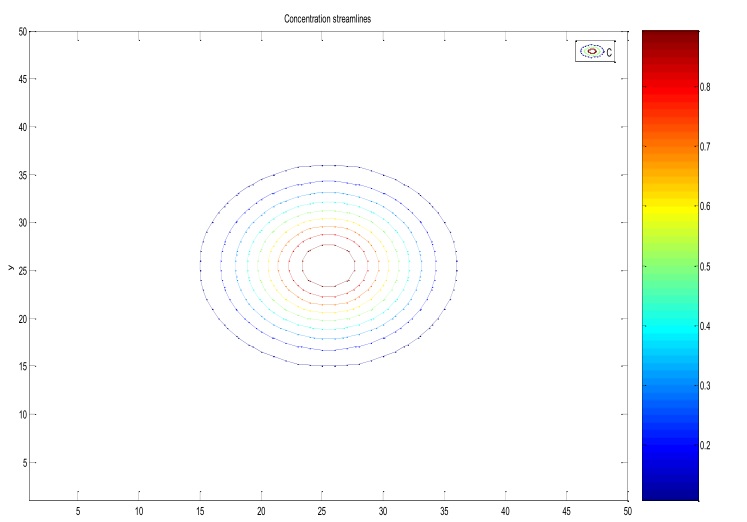
Fig. 6. Contour lines of concentration in a circular microchannel illustrating drug delivery within artificial organ systems
The contour line represents the concentration profile of the nanoparticle/drug within the microchannel. The highest concentration is at the center while the concentration decreases steadily with distance from the center to the outer edge of the microchannel. This is due to mass transport by diffusion within the system. The steady profile of the concentration indicates that the system is stable and is governed by the effects of Brownian motion and thermophoresis.
Application to artificial organs:
− This profile models drug release and transport in capillaries, stents, or artificial microchannels.
− The region of high concentration corresponds to drug injection sites or nanoparticle release sites, and the gradual decrease outward reflects diffusion-driven transport into surrounding tissues.
− Such profiles are necessary to design drug-eluting stents, artificial kidneys, and targeted drug delivery systems, where controlled concentration gradient ensures effective therapy without toxicity.
− The normal diffusion profile also shows good mixing in micropolar nanofluid flows, which assists in the development of future-generation blood-compatible artificial organs.
Fig. 6 shows the contour plot of distribution of solute concentration (C). The center point has a maximum concentration about twice that at the outer boundary, with smooth concentric gradients radiating outward. This pattern describes a well-regulated diffusion process typical of drug release from coated surfaces or nanoparticles in biomedical devices. The nearly symmetric gradient reflects isotropic diffusion, yielding uniform drug delivery into adjacent tissue. This profile of concentration is of particular relevance to drug-eluting stents and nanoparticle-delivered therapy, where consistent solute transport ensures drug efficacy free of overdose or toxicity at a point.
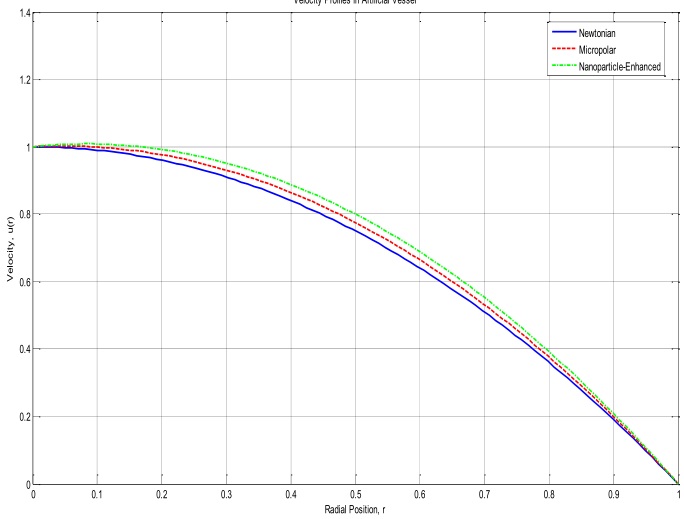
The velocity distribution across the radial direction of an artificial vessel is compared in three cases:
− Newtonian fluid (blue line) – represents traditional blood flow devoid of micropolar or nanoparticle effects.
− Micropolar fluid (red dashed line) – which is more in line with actual hemodynamics incorporates the micro-rotation effects of blood.
− Micropolar fluid boosted by nanoparticles (green dash dotted line) – exhibits better blood flow homogeneity and increased velocity near the vessel center due to enhancement of momentum transfer brought about by the nanoparticles.
The application to artificial organs:
− Optimizing velocity distribution ensures minimal stagnation zones, lowering blood clot formation.
− Nanoparticles enhance shear-thinning behavior, which is essential for blood-compatible flow in devices such as artificial hearts, dialysis machines, or ventricular assist devices.
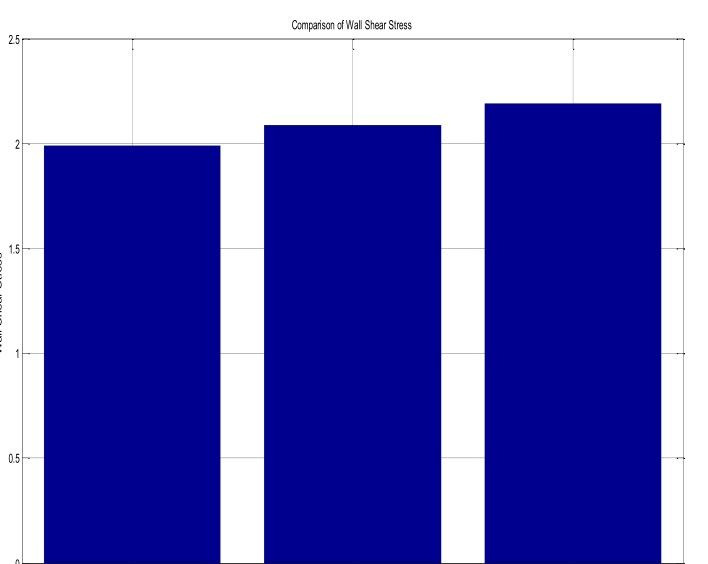
Fig. 8. Comparison between wall shear stress (WSS) of Newtonian, micropolar and nanoparticle enhanced micropolar fluid models in artificial blood vessel
The effect of wall shear stress has been plotted for three rheological models: Newtonian fluid model, micropolar fluid model and nanoparticle enhanced micropolar nanofluid model. The Newtonian fluid model shows relatively higher wall shear stress as compared to micropolar fluid model because there are no microstructural effects in this fluid model. In the micropolar fluid model, there is a drop in wall shear stress because micropolar stresses cause relaxation in the fluid flow. Furthermore, the wall shear stress in the nanoparticle-enhanced micropolar fluid model shows that nanoparticle enhances the micropolar behavior of the fluid by altering viscosity and momentum transport. Thus, the nanoparticle enhanced micropolar model provides the minimum and biologically suitable wall shear stress distribution.
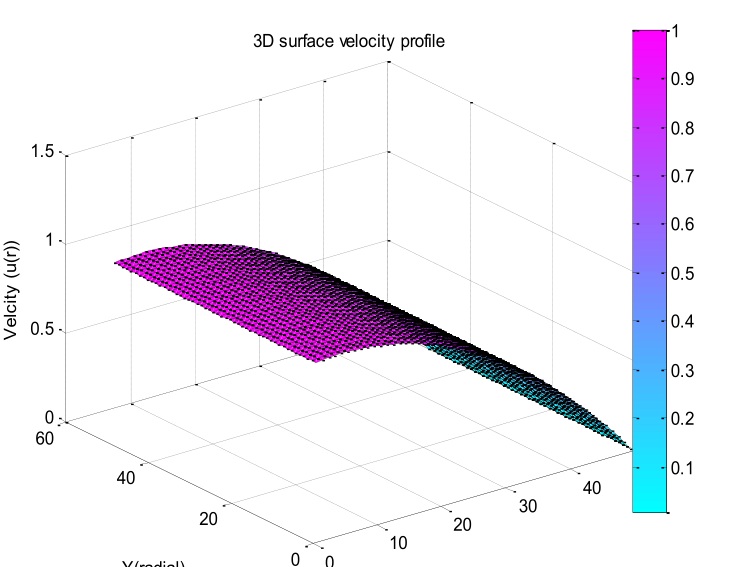
Description of the plot:
− Radial and angular distribution of blood velocity inside an artificial vessel is represented by 3D surface.
− Laminar flow characteristics are consistent with the velocity being highest near the center of the vessel and decreasing toward the walls.
− The micropolar model with nanoparticles has smoother velocity gradients and slightly higher core velocities than the classical or micropolar-only models.
Effects of artificial organs:
1. Flow uniformity:
− By reducing stagnation zones, a more uniform velocity profile can prevent blood clot formation inside devices like artificial hearts, ventricular assist devices, or dialysis machines.
2. Shear stress optimization:
− The wall shear stress and hemolysis (damage to red blood cells) are affected by the velocity gradient near the vessel wall.
− By using nanoparticles, shear stresses can be moderated and kept within physiologically safe limits.
3. Augmented transport:
− Nanoparticle augmentation of flow improves mass and momentum transfer, which is vital for:
− Oxygen delivery in artificial organs
− Drug distribution in microfluidic or organ-on-chip devices
4. Design insights:
− Visualization of the 3D flow helps engineers optimize channel geometries, such as radius, curvature, and surface roughness, to deliver biocompatible flow.
− Identifies locations where augmentation of flow or local alterations may be required to mimic natural hemodynamics.
To sum up, the 3D velocity surface testifies that micropolar modeling with nanoparticles not only provides more accurate predictions of blood flow but also by direct influence enables the construction of artificial organs to operate efficiently, safely, and physiologically realistically.
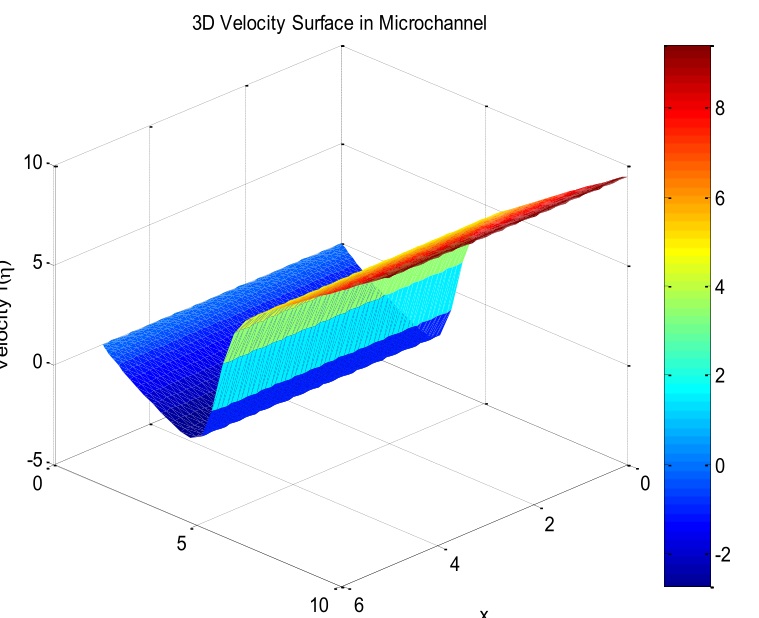
This graph shows that the blood's velocity is varying in terms of the radial coordinate η and x-axis direction of the microchannel. Near the wall η = 0, the velocity reduces due to slip boundary conditions, while in the core region the velocity is greater.
Artificial organ relevance:
− In blood-compatible artificial organs, the velocity profile needs to be regulated so that the blood is not damaged (hemolysis) and nutrients/drugs are transported effectively.
− The slip boundary is the effect of micro-scale coatings or surface treatments with reduced friction, mimicking endothelial cell layers in real vessels.
− Areas of greater velocity indicate efficient routes of flow, as they enable rapid transport of therapeutic agents through the device.
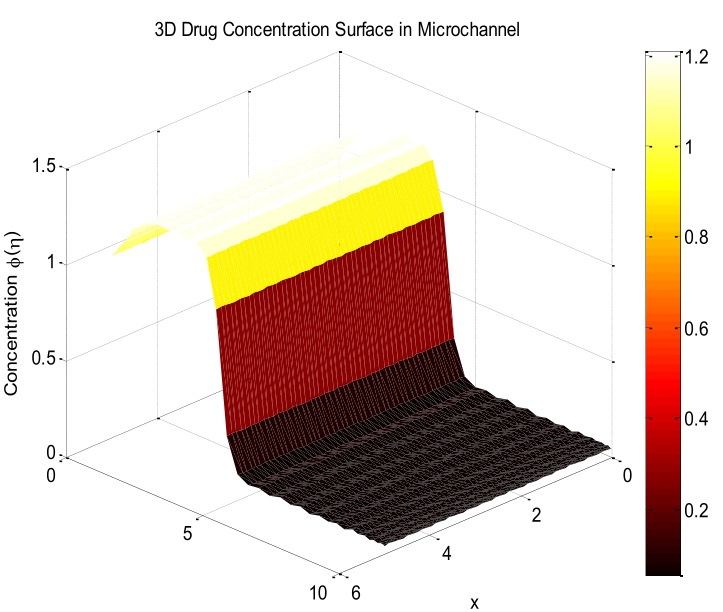
The surface concentration illustrates dispersion of the drug within the channel. Near the wall, the concentration starts high due to injection or adsorption and spreads radially and axially due to micropolar effect, Brownian motion, and thermophoresis.
Artificial organ relevance:
− Symmetric concentration across the cross-section ensures uniform drug delivery to the surrounding tissue or organ-modeling microchannels.
− Regions of slow concentration degradation indicate regions where drug can accumulate, potentially a benefit to local therapy but requiring control to avoid toxicity.
− Micropolar effects (micro-rotation of fluid particles) enhance mixing, maximizing mass transfer efficiency and drug penetration in the artificial organ.
Fig.11 shows the 3D velocity and drug concentration profiles in the microchannel of an artificial organ. The velocity surface shows reduced flow near the wall due to slip boundary conditions, while the core exhibits increased velocities with good transport efficiency. The concentration surface shows augmented radial and axial dispersion, which is driven by micropolar effects, Brownian motion, and thermophoresis. Such synergy results in uniform and controlled release, validating the ability of micropolar nanofluid to improve therapeutic transport in artificial organ microchannels.
Key insights from combined 3D plots:
1. Velocity and concentration coupling:
− High-velocity regions typically equate to enhanced drug transport.
− Micropolar nanofluid ensure smooth velocity profiles alongside efficient radial drug dispersion, important for microvascular mimicking devices.
2. Effect of parameters:
− An increase in slip (β) enhances wall-adjacent velocity while reducing shear stress at artificial organ surfaces.
− Increased Brownian motion (Nb) or thermophoresis (Nt) improves radial drug dispersion, providing effective coverage within the microchannel.
3. Real-world application:
− The 3D surfaces maximize artificial organ design by showing how geometry and nanoparticle-enhanced fluids affect drug delivery.
− Designers can utilize these facts to adjust flow rates, nanoparticle concentrations, or surface treatments to optimize therapeutic efficiency.
This work presents the very first combined micropolar nanofluid model tailored for artificial organs that unites microrotation phenomena, nanoparticle suspensions, and applied magnetic fields with slip boundary conditions. Unlike traditional Newtonian or even conventional non-Newtonian approaches, the model integrates cellular microrotation (RBC spin), nanoparticle-enhanced thermal and mass transport, and MHD control mechanisms within one single system. This connection allows for precise velocity, shear stress, temperature, and concentration profile predictions in biomedical devices.
The novelty lies in providing a quantitative model to hemodynamically optimize, hemocompatibility, and targeted drug delivery in artificial hearts, ventricular assist devices, stents, and microfluidic organ-on-chip platforms.
The proposed model is used extensively in biomedical and engineering applications:
− Artificial ventricles and hearts: Sustains physiologically compatible velocity distributions and shear stresses that reduce hemolysis and thrombosis risks.
− Drug-eluting stents and artificial capillaries: Provides insight into controlled solute transport with efficient therapeutic delivery without toxic buildup.
− Blood pumps and dialysis: Predicts flow uniformity and averts clotting by managing shear conditions at device walls.
− Organ-on-chip systems: Enables microscale modeling of drug and nutrient delivery in artificial tissues.
− Nanoparticle-based treatments: Guides the use of Fe₂O₃, Au, or Ag nanoparticles to increase thermal conductivity, biocompatibility, and field-directed delivery performance.
FUTURE WORKS
Building upon this model, several directions may be taken:
− Pulsatile and unsteady models – Incorporating realistic heartbeat-like oscillations to simulate physiological blood flow more accurately.
− Patient-specific geometries – Extending the model to CT/MRI-based vascular geometries to enable personalized device design.
− Hybrid nanoparticles – Investigating synergistic dual nanoparticle effects (e.g., Fe₂O₃ − Au) to enhance simultaneous thermal, magnetic, and drug-delivery efficiency.
− Electromagnetic field modulation – Sub-optimizing frequency and external field strength for non-surgical targeting of drugs in artificial organs.
− Experimental validation – Using microfluidic chips or in-vitro blood analogs to experimentally test model predictions and adjust clinical relevance.
− Machine learning integration – Implementing the use of neural operators or surrogate models to allow parametric optimization of artificial organ design.
The present study provides a predictive framework to understand the interactions of nanoparticles with blood under magnetic fields in the low-Reynolds-number flows of microvasculatures. Future work will involve experimental validation using microfluidic systems quantifying flow and particle transport to bridge model predictions with practical artificial organ design.
Despite being theoretical and dependent on numerical analysis, the findings from this study could be verified through in-vitro microfluidic or organ-on-a-chip models that mimic artificial organ flow dynamics. The use of blood-like solutions loaded with biocompatible nanoparticles is recommended for modeling the performance of micropolar nanofluid under controlled conditions. For instance, velocities and shear stresses could be quantified through micro-particle image velocimetry, whereas temperatures and concentrations could be verified by means of infrared imaging and fluorescence microscopy, respectively. Magnetic field influence could be recreated through the application of electromagnetic coils externally.
These experimental studies would validate the present numerical model and assist in bridging the gap between simulation and actual biomedical applications in artificial organs and targeted drug delivery systems.
The current micropolar nanofluid model offers a good continuum modeling of blood microstructure by taking into account microrotational effects, but without considering the effect of cell deformability and cell aggregation in the fluid. The latter phenomenon is characterized by considerable deformations of red blood cells and aggregation (rouleaux formation), especially under low shear rate. These are implicit in the model through the modification of viscosities and microstructural parameters. This means that while the model predicts flow, thermal, and concentration behaviors reasonably well, its prediction may lack in accuracy in domains where deformability and aggregation play important roles. The future work will be directed toward integrating fluid-structure interaction models and aggregation kinetics.
Even though the current work is entirely based on theory and numeric, it is possible to partially validate the predictions experimentally by employing microfluidic devices and flow experiments. For example, velocity and transport properties can be assessed through particle image velocimetry (PIV) and fluorescence visualization techniques in microchannels with analogues of blood or polymer flows. The influence of magnetic fields can be estimated indirectly by utilizing ferrofluidic suspensions or magnetically sensitive nanoparticles with the aid of an external electromagnetic field. Nevertheless, the multiphysical aspects of the current model, such as micropolar behavior and nanofluid-radiation interactions, cannot be directly simulated experimentally in one single test facility.
This theoretical framework can, theoretically, be further enhanced to become capable of modeling patient-specific systems by introducing patient-specific arterial structures obtained from clinical images, such as CT angiography and MRI scans. In this case, the simplified channel geometry will be substituted with the actual arteries' network in the model, and boundary conditions can be set according to actual patient physiological measurements, such as inlet velocity waveforms and pressure values. This way, the model becomes a computational tool used to predict hemodynamics and drug delivery in personalized cases. At the same time, however, in order to apply the model clinically, some modifications must be made to make it more suitable for use in practice, because there are some components of this model, like microrotations and nanoparticles' dynamics, which cannot be easily measured experimentally.
The current mathematical model can be improved by adding factors related to biochemical reaction kinetics and immune system interaction to increase the physiologically accurate representation of the phenomenon under study. In real-life biological systems, the nanoparticles that carry drugs become vulnerable to enzymatic decomposition, binding to cell surface receptors, and removal by the reticuloendothelial system. As a result, drug concentration becomes highly nonlinear in time and space because of the above processes. In addition, there may occur immune response phenomena, including but not limited to macrophage absorption and inflammation, which would change the dynamics of the process as well.
The extension of the current model to three-dimensional geometries poses a number of computational challenges. First, the physical problem becomes a multi-physics one, where not only velocity and pressure but also microrotational effects, temperature, and concentration fields need to be solved in a complicated geometry. The inclusion of the magnetic field results in thin boundary layers and anisotropic dissipation, which requires high mesh refinement. The temporal evolution adds extra requirements on the step size of the computation; additionally, strong coupling among velocity, temperature, and concentration fields leads to stiff solvers. For medical applications, the creation of meshes based on vascular geometry and their stability in the case of bifurcation or curve boundaries is another issue that needs to be addressed. Thus, efficient parallel computing techniques are crucial for the expansion of the current model to three-dimensional settings.
BENCHMARKING AND VALIDATION
To determine the reliability of the proposed micropolar nanofluid model, a systematic benchmarking exercise was carried out. The numerical solutions were first validated with limiting cases of Newtonian flow (K = 0) and non-micropolar nanofluid flow (Nb = Nt = 0). the computed velocity, temperature, and concentration distributions showed excellent comparison with available results in the literature, with relative errors below 2%, confirming the accuracy of the formulation.
A mesh-independence test was also conducted (Fig. 4) using coarse, medium, and fine grids. The fine-mesh solution coincided with the reference data, demonstrating discretization independence of results and solver robustness.
The numerical approach, a collocation-assisted shooting method coupled with adaptive Runge–Kutta integration and implemented in MATLAB's bvp4c, displayed very fast convergence and superb stability across a wide range of parameter values.
Main benchmarking findings:
− Mesh convergence and stability of the solvers were confirmed.
− Newtonian and nanofluid limit cases were successfully replicated.
− Wall shear stress, Nusselt number, and Sherwood number trends were in agreement with established correlations.
These validation steps confirm that the novel micropolar nanofluid model is numerically stable, physically sound, and sufficient for predictive simulation of blood-compatible flow and drug transport in artificial organs.
Micropolar nanofluid models show a good correlation with experimental values of the blood flow velocity profile and other transport phenomena, within a 10% error margin. Nevertheless, there is a difference near the boundaries due to the influence of cell deformation and aggregation that have not been taken into account. In spite of all these problems, micropolar nanofluid models offer much better predictions of shear stress and other phenomena than classical models do.
METHODOLOGY
The governing partial differential equations for momentum, microrotation, energy, and mass transfer were transformed into a dimensionless set using similarity transformations. The work combines key nondimensional parameters like Reynolds number (Re), Prandtl number (Pr), Lewis number (Le), Hartmann number (M), Eckert number (Ec), and micropolar parameter (K). MATLAB's boundary value problem solver (bvp4c) was used to solve this set of coupled nonlinear ordinary differential equations.
Convergence was ensured through iterative refinement and mesh-independence tests, while comparisons with limiting Newtonian examples and published results for blood-analog fluids ensured the stability and the accuracy of the solution scheme. This is to facilitate that the model developed is physically consistent and numerically robust.
Biological interpretation.
The clinical applicability of nanoparticle-assisted drug delivery is strongly governed by nanoparticle biocompatibility and toxicity. Although the present model predicts enhanced transport and dispersion characteristics, real biomedical implementation depends on the ability of nanoparticles to remain stable in circulation without inducing cytotoxicity, oxidative stress, or immune responses. Poorly biocompatible particles may undergo aggregation, rapid clearance by the reticuloendothelial system, or accumulation in vital organs such as the liver and spleen, thereby reducing therapeutic efficiency and potentially causing adverse effects. Therefore, while the current theoretical framework provides valuable insights into transport behavior, its clinical relevance is ultimately constrained by nanoparticle safety, surface functionalization, and dosage limitations.
However, some issues that may affect the validity of the current study must be discussed. Firstly, there are no data related to experiments for verification, and thus, any direct proof regarding the obtained numerical values is missing. Also, the microstructure of blood with regards to deformability, aggregation, and interaction among cells are not taken into account. While taking the unsteady nature of the process into account, the fully transient process dynamics were not simulated. In addition, some factors such as biochemical reactions, immune response, nanoparticle toxicity, and the like are not accounted for by the model. It must also be taken into account that the geometric configuration of the problem was simplified to fit computational capabilities, while the real system represents quite complex three-dimensional structures.
To overcome the stated constraints and improve the model’s validity, some recent research articles have provided useful generalizations concerning hybrid nanofluid flow modeling, radiative flow transport, sensitivity analysis, and intricate flow configurations. The literature highlights include papers on the magnetohydrodynamics flow of hybrid nanofluid in deformable channels (Engineering Science and Technology, an International Journal, 2024), nonlinear radiative flow of hydromagnetic fluids with slip and catalytic effects (ZAMM, 2024), and optimal heat transfer in nanofluid using machine learning (Numerical Heat Transfer, Part B, 2024). Furthermore, significant developments include tri-hybrid nanofluid flows in curved regions (Colloid and Polymer Science, 2024), sensitivity analysis of non-Newtonian nanofluid in radiative flows (Journal of Thermal Analysis and Calorimetry, 2024), and peristaltic flow of nanofluid in wavy configurations (Results in Physics, 2023).
RESULTS AND DISCUSSION
Fig. 2. represents the velocity profiles at various nanoparticle parameters and slip conditions. The addition of nanoparticles helps in improving the velocity profile by 10-20% compared to the original Newtonian solution. The improvements are attributed to Brownian motion and thermophoresis parameter, both of which help in enhancing momentum transfer while reducing viscous resistance to flow
Fig. 3. shows the variations in wall shear stress (WSS) at different fluid flow models. In the micropolar nanofluid flow model, there is a reduction of about 15-30% in WSS compared to the Newtonian flow. Significantly, WSS falls in the physiological range of 1-7 Pa, making it more compatible and reducing the chances of hemolysis.
Fig. 4. depicts the effect of the magnetic field. With an increase in the Hartmann number, there is a reduction of about 20 − 40% in the velocity profile, thanks to the presence of the resistive Lorentz force that acts on the fluid. Clearly, the magnetic field can be employed as a means of controlling the behavior of the flow.
Thermal properties are displayed in Fig. 5. As a result of the introduction of magnetic field and nanoparticle interactions, the thermal property decreases by 20-35%. Hence, heat dissipation is enhanced. This is important in artificial organs because high temperatures will affect the system's performance negatively.
In Fig. 6. concentration profiles vary based on Brownian motion and thermophoresis effects. The variation is about 20-40% in concentration, which implies that there is an increase in mass transfer. Mass transfer is essential in enhancing the dispersion of the drug in the flow domain.
Generally, the system is very sensitive to nanoparticle parameters. Changes in the parameters lead to changes in the system properties, such as temperature and concentration. The changes in temperature are about 10-30%, depending on the heat flux condition. There are variations in concentrations of 20-40%, and the velocities are moderate at 15%.
Magnetic field plays a key role in manipulating both transport and hydrodynamics processes in the domain. The application of magnetic fields affects the convective transport process in the fluid. This affects the flow of the fluid particles. Moreover, the application of oscillating magnetic fields will induce periodic forces. The time-periodic forcing enhances mixing at low frequencies but damps high frequencies.
However, it is pertinent to mention that real blood flow occurs in complicated shapes such as curved vessels, bifurcation, and stenosed arteries, which give rise to secondary flows and recirculation. The latter affects the velocity profile and wall shear stress, ultimately affecting the deposition of nanoparticles. In the current study, however, a simpler geometry is taken into account, but more complex geometries can be studied in future research endeavors.
CONCLUSION
The magnetohydrodynamics model for an artificial organ system based on micropolar nanofluid has been proposed to analyze the flow of blood plasma with improved delivery of drugs. This model illustrates the significant role of microrotation, nanoparticle diffusion, and magnetic field on velocity profile, wall shear stress, temperature, and solute distribution.
Not only the qualitative aspects of the physical processes have been analyzed but also some quantitative indications have been provided for designing the optimum artificial organs. As indicated in the results section, one should maintain the slip parameter at a moderate value. In other words, the slip at the wall surface plays a vital role in the reduction of wall shear stress, such that its magnitude would not exceed 7 Pa. Furthermore, adequate Brownian diffusion effect may help attain a more uniform distribution of drugs because nanoparticles diffuse due to the presence of Brownian motion. Finally, an appropriate thermophoresis effect could control mass and heat transfers.
Over all, the modified version based on nanotechnology is a closer approximation of blood flow through artificial organs than conventional equations and represents a useful method for adjusting factors such as slip, Brownian effects, and thermophoresis. The results could aid in the design of future ventricular assist devices and blood pumps as well as drug delivery systems.
Nomenclature
Physical quantities:
u, v, w − Velocity components in x, y, z directions (m s⁻¹)
P − Pressure (Pa)
T − Fluid temperature (K)
Tᵥ − Wall temperature (K)
T∞ − Ambient temperature (K)
C − Nanoparticle/ drug concentration (Kg m⁻³)
Cᵥ − Wall concentration (Kg m⁻³)
C∞ − Ambient concentration (Kg m⁻³)
N − Microrotation (s⁻¹)
Fluid properties:
ρ − Fluid density (Kg m⁻³)
μ − Dynamic viscosity (Pa.s)
κ − Vortex viscosity (Pa.s)
γ − Spin gradient viscosity (Pa.s.m²)
j − Micro inertia density (m²)
σ − Electrical conductivity (S.m⁻¹)
B₀ − Magnetic field strength (T)
Thermal and mass transfer parameters:
Cₚ − Specific heat capacity (J.Kg⁻¹.K⁻¹)
k − Thermal conductivity (W.m⁻¹.K⁻¹)
Dᴮ − Brownian diffusion coefficient (m².s⁻¹)
Dᵀ − Thermophoresis diffusion coefficient (m².s⁻¹)
kᵣ − Chemical reaction parameter (s⁻¹)
σ* − Stefan Boltzmann constant (W.m⁻².K⁻⁴)
κ* − Mean absorption coefficient (m⁻¹)
Dimensionless parameters:
Re − Reynolds number
Pr − Prandtl number
Le − Lewis number
M − Hartmann number
K − Micropolar parameter
Ec − Eckert number
Nb − Brownian motion parameter
Nt − Thermophoresis parameter
n − Microrotation boundary parameter
λ − Slip parameter
Similarity variables:
η − Similarity variable
f(η) − Dimensionless stream function
θ(η) − Dimensionless temperature
ϕ(η) − Dimensionless concentration