
INTRODUCTION
Since the majority of industrial and naturally occurring fluids contain suspended tiny or millimeter-sized solid particles, often known as dust nanoparticles, it is very difficult to obtain a fluid that is fully free of impurities. The presence of these dust particles markedly affects the thermophysical properties of fluids, frequently improving their heat and mass transport efficiency. These two-phase systems, referred to as dusty fluids, are named for the distributed particulate matter that modifies flow and energy transport properties. The examination of dusty fluids has garnered significant interest owing to their extensive practical uses, such as in oil and gas transportation, combustion systems, nuclear reactor cooling, geothermal energy systems, and diverse aerospace and industrial operations. Comprehensive investigations have focused on the influence of dust particles on enhancing heat transfer efficiency under various flow conditions [1–4]. The seminal research in this domain originates from Saffman [5], who formulated the governing equations for the dynamics of dusty gases based on specific simplifying assumptions. He regarded the dust particle cloud as a pseudo-fluid, disregarding individual particle interactions inside the continuum model. Marble [6] susequently expanded this concept by examining the dynamic behavior of gases with fine solid particles, establishing a foundation for further research on dusty gas dynamics and hybrid nanofluids. The rising need for efficient thermal systems across diverse engineering and industrial sectors has rendered heat transfer improvement a significant area of study in recent years. Traditionally, pure fluids like water, ethylene glycol, and motor oil have served as heat transfer medium; however, their poor thermal conductivity constrains their efficacy in high-performance applications. To address this issue, researchers developed nanofluids, which consist of nanoparticles suspended in a base fluid to improve its thermal properties. The term “hybrid nanofluid” was coined to denote fluids that include two or more distinct nanoparticles concurrently distributed in a base liquid. The collective activity of these nanoparticles has synergistic effects that markedly enhance thermal conductivity, viscosity, and total energy transfer efficiency. Due to their exceptional thermophysical properties, hybrid nanofluids are employed in various technical and commercial applications, such as automotive braking fluids, solar water heating systems, refrigeration units, heat exchangers, power transformers, and microelectronic cooling systems [7, 8]. Numerous researchers have conducted comprehensive studies employing diverse hybrid nanoparticle.
The usage and conversion of solar energy are both significantly aided by thermal radiation, which serves as a key process in a variety of solar thermal systems. The majority of the solar radiation that reaches the Earth is composed of wavelengths that are visible and infrared. These wavelengths are absorbed by collector surfaces and then transformed into heat energy via the process of radiative transfer. In subsequent steps, the thermal energy that has been absorbed is transferred to working fluids, which may include water, oil, or nanofluids. These working fluids are utilized in applications such as solar water heating, power production, and thermal storage. These systems are very dependent on the absorptivity, emissivity, and conductivity of the collector materials in order to achieve their desired level of efficiency. Due to the better optical and thermal properties of nanofluids and hybrid nanofluids, the incorporation of these materials into solar collectors results in an additional enhancement of the radiative heat transfer characteristics. The inclusion of nanoparticles enables greater thermal conductivity and enhanced absorption of incoming solar radiation, which ultimately leads to increased rates of energy conversion. Furthermore, the modeling of thermal radiation, which is frequently based on the Rosseland diffusion approximation, is helpful in comprehending the radiative heat transport that occurs within the material that is being studied. The optimization of radiative heat transfer is vital for improving performance and decreasing energy losses in advanced applications such as solar towers, photovoltaic–thermal hybrid systems, and concentrated solar power plants. As a result, thermal radiation has become an essential component of current solar energy engineering [9–14].
The study of the motion and behavior of electrically conducting fluids, such as plasmas, liquid metals, and electrolytes, when they are exposed to magnetic fields is referred to as "magnetohydrodynamics" which is abbreviated as "MHD." The interaction between the electric current created by a magnetic field and a flowing conductive fluid is the basic premise of magnetic hydrodynamics (MHD). The movement of this kind of fluid through a magnetic field causes the generation of electromagnetic forces called Lorentz forces, which in turn change the fluid's pressure, temperature, and velocity. The induced current changes the existing magnetic field, which in turn affects the flow dynamics as a whole, as a result of this interaction, which forms a linked connection. Numerous fields, including geophysics, biomedical engineering, astronomy, and industrial processes, make use of MHD. Engineering applications include MHD generators, liquid metal cooling systems, and aerospace propulsion devices; astrophysical applications include explanations of solar flares, sunspots, and plasma dynamics; biomedical applications include drug targeting and controlled transport using magnetic fields; geophysical applications include explanations of Earth's magnetic field and core convection; and engineering applications include MHD generators [15–17]. An example of the strong coupling between magnetic forces and fluid motion in magnetohydrodynamic systems is the impact that a magnetic field may have on the behavior of a conductive fluid's boundary layer through electromagnetic damping or acceleration effects. Sajid et al .[18] investigated the irreversibility process and thermal energy properties of a tetra-hybrid radiative binary nanofluid, highlighting its possible uses in solar energy systems. Sakkaravarthi et al. [19] use a neural network, especially the Levenberg-Marquardt method, to investigate the entropy optimization performance of a Casson tetra-hybrid nanofluid flowing electro-magneto-hydrodynamically across a spinning disk. Hussain et al. [20] conducted an investigation on the radiative magneto–cross Eyring–Powell fluid flow with activation energy across a porous stretched wedge. They took into consideration the effects of suction/injection as well as ohmic heating. Ali et al. [21] investigated the concentration and temperature boundary layers of a Maxwell nanofluid that contained nanoparticles. They focused on the impact that thermophoretic and Brownian motion effects had on the properties of heat and mass transport [22].
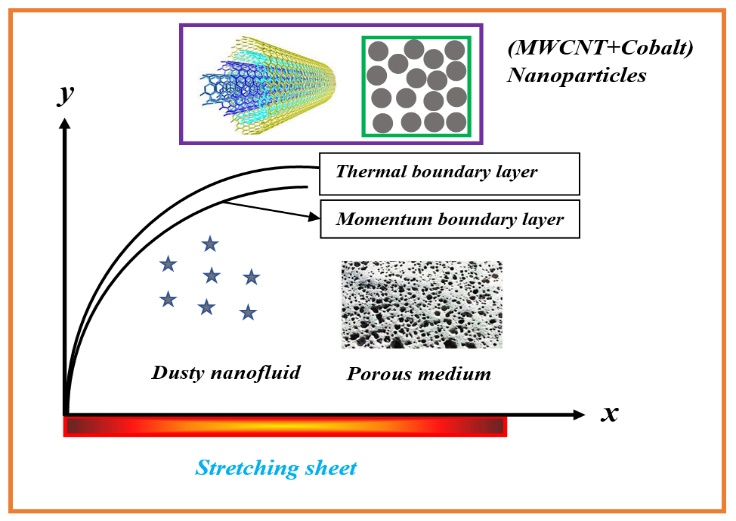
The current research states that in order to comprehend complex transport phenomena in hybrid nanofluids, the simultaneous impacts of Darcy–Forchheimer porous drag and magnetohydrodynamic (MHD) flow across a stretching sheet have been studied. For the purpose of making numerical computations easier, the governing equations that describe such flows are stated as nonlinear partial differential equations (PDEs). These equations are then translated into ordinary differential equations (ODEs) by employing appropriate similarity transformations. After the equations have been converted, the Bvp4c solver in MATLAB is used to solve them so that the numerical evaluation can be accurate. A comparison of the various nanoparticle additions reveals that MWCNT nanoparticles have a rather minor influence on heat transmission. On the other hand, cobalt nanoparticles demonstrate a stronger thermal enhancement due to their superior thermal conductivity and magnetic characteristics. When it comes to aerospace thermal systems, notably aircraft engines, where components are subjected to extremely high temperatures, the significance of cobalt is especially apparent. With a melting point of around 1,495 degrees Celsius, cobalt offers exceptional resistance to high thermal stresses, allowing it to maintain its stability even in situations with temperatures that are higher than 1,400 degrees Celsius. Because of its outstanding heat tolerance, cobalt is a material that is highly sought after in aerospace applications. This underscores the significance of cobalt in improving the heat transfer efficiency of hybrid dusty nanofluids that are utilized over heated stretched surfaces.
MATHEMATICAL MODELING
In the presence of dusty hybrid particles, steady 2D leading
Cobalt/MWCNT-engine oil nanofluid flow has been taken into the
account. Flowing across a heated stretching sheet is the dusty hybrid
nanofluid via a porous medium. In this model we considered the sheet
is taken as along the x
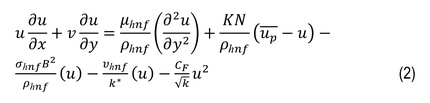
Fluid Phase:

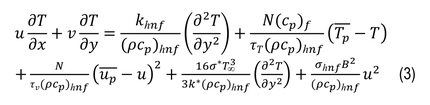
Dusty Phase:



The carrier is a hybrid nanofluid flowing over a stretching surface
at
Momentum exchange is modeled by a drag term proportional to the
slip velocity
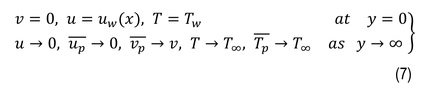
The appropriate flow boundary requirements that have been enforced for hybrid nano- fluid and dust phases can be stated as follows:
Thermo-physical properties of hnf are:
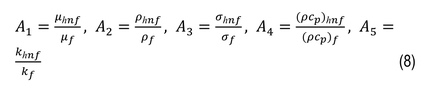
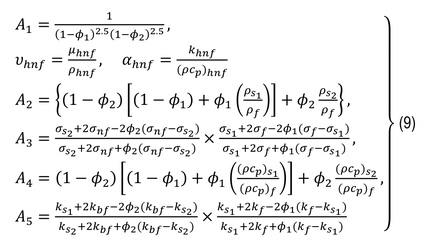
Defining the similarity variables and transformations are:
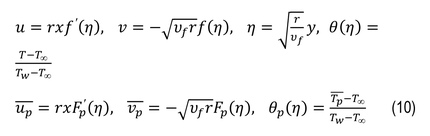
With the assistance of equations (8) – (10), equations (2) – (6) and their appropriate boundary conditions are transformed as given below.
Fluid Phase:


Dusty Phase:


Corresponding boundary condition are
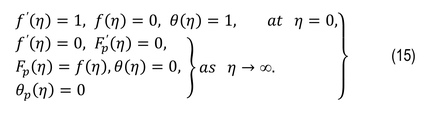
The dimensional form of Cf and Nur are given by

where shear stress

The non-dimensional form of Eq. (16) is converted as


where
Entropy generation analysis
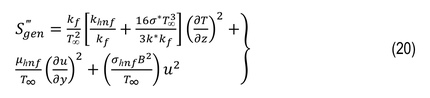
The Entropy generation number NG becomes
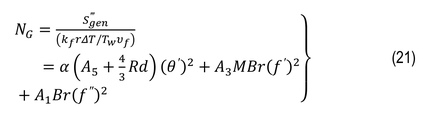
The Bejan number is
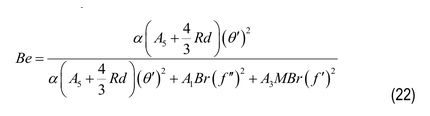
The non-dimensional quantities are
NUMERICAL METHOD
It is determined that the Bvp4c technique is the most effective approach for numerically solving the non-dimensional system of equations (10–14) and (15). With this technique, we begin by transforming the fundamental differential equations into a set of first-order ODEs as follows.

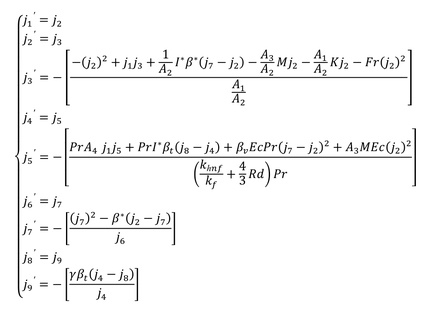
As well the boundary conditions are
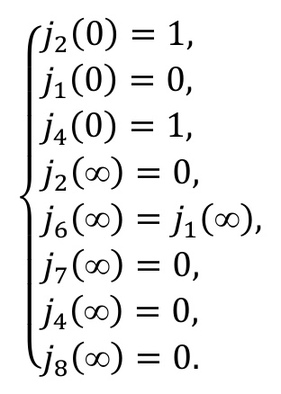
The set of nonlinear ODEs was integrated using MATLAB’s bvp4c
routine with adaptive mesh refinement. The domain was truncated at
Code Validation:
The results of the present code were compared to those obtained by Mishra et al. for the case of various values of Prandtl number, as shown in Table 2. We discovered a significant level of convergence between the current findings. In this case, the step size in the technique is (h = 0.001), and the operation is frequent until the desired level (1 × 10⁻⁸) of accuracy is reached. As a result, the current code is justified.
RESULTS AND DISCUSSION
The results of the comparison are acquired from Table 2, which
displays the rate of heat transfer in the immediate area for a variety
of Pr values. The findings of both investigations were determined to
be quite accurate. The M, K, Rd,
M = 0.5, K = 0.2, β* = 0.1, I* = 0.1,
Fr = 0.2, Ec = 0.5, Re = 0.5, α = 0.1, βv = 0.3,
βt = 0.2.
The nature of
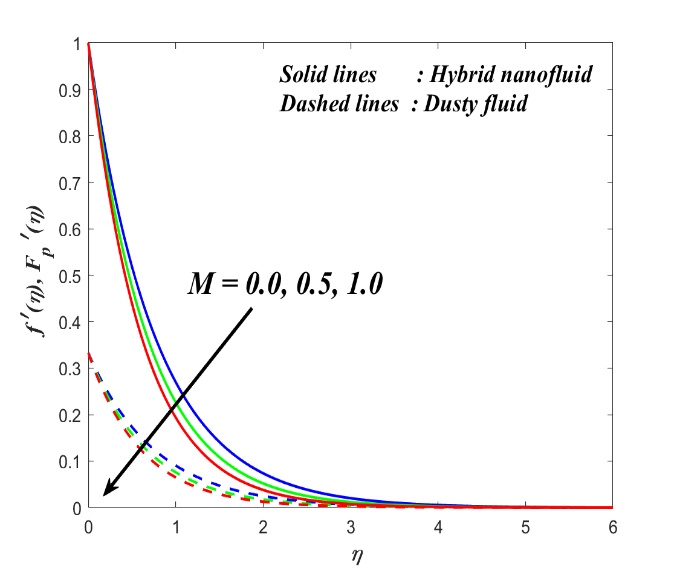
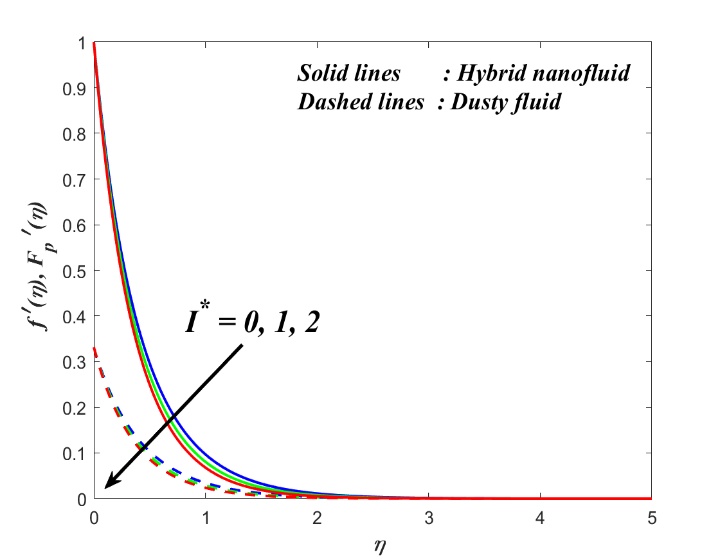
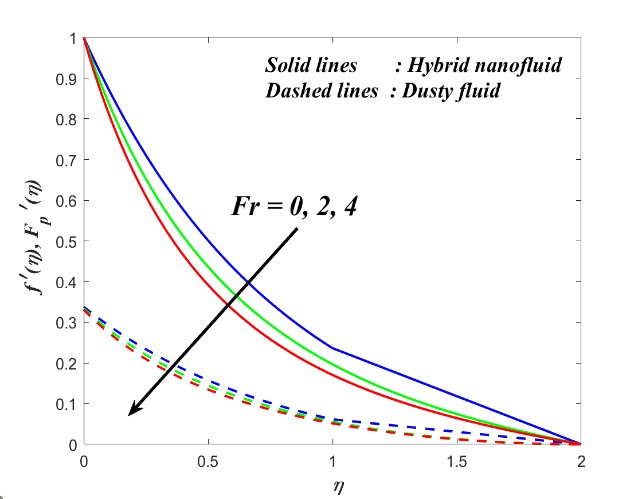
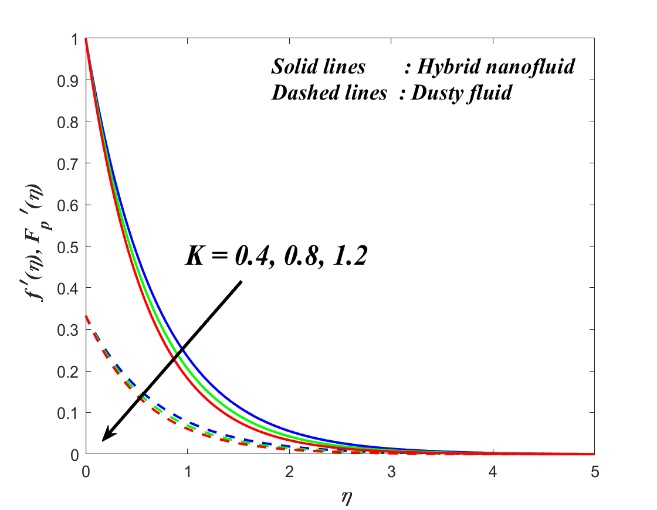
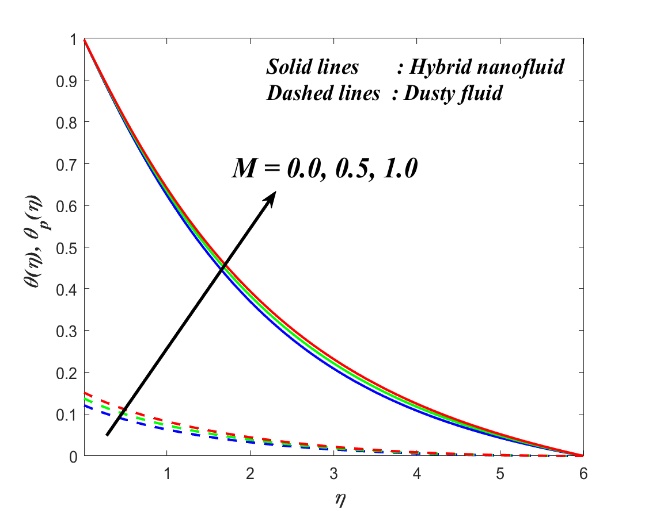
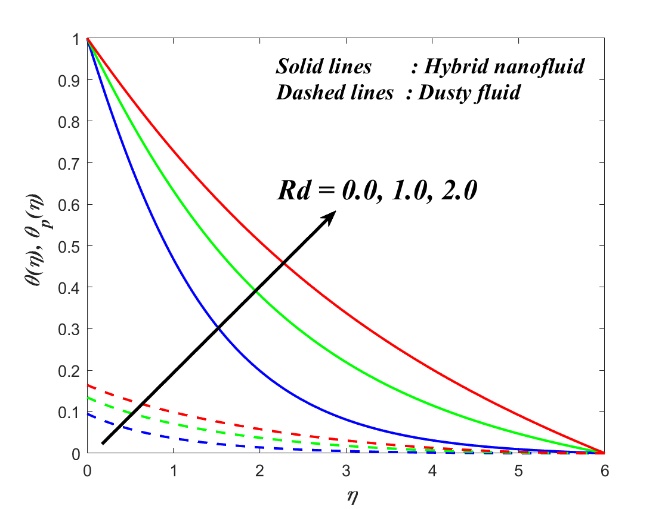
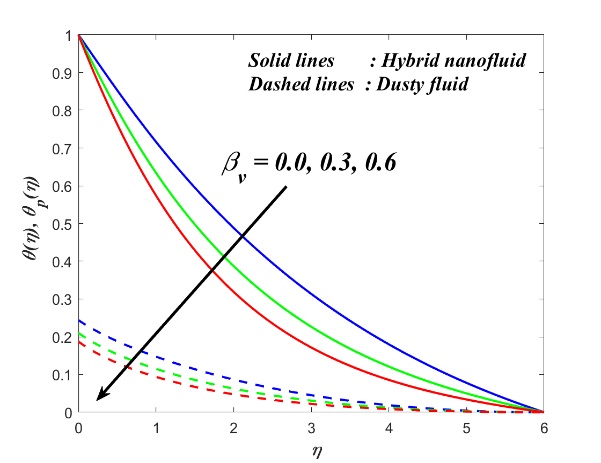
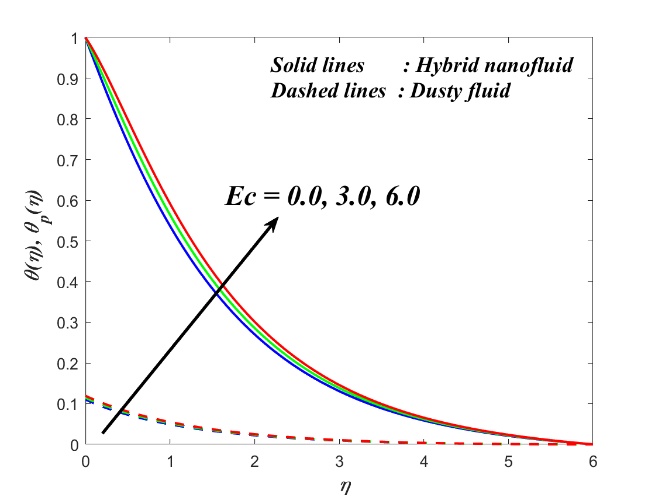
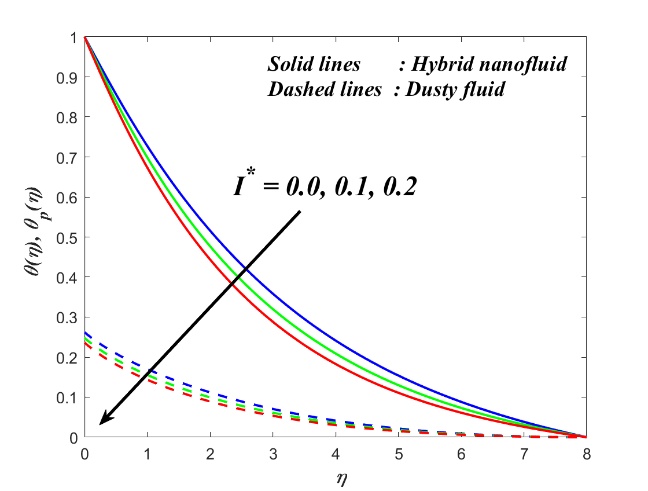
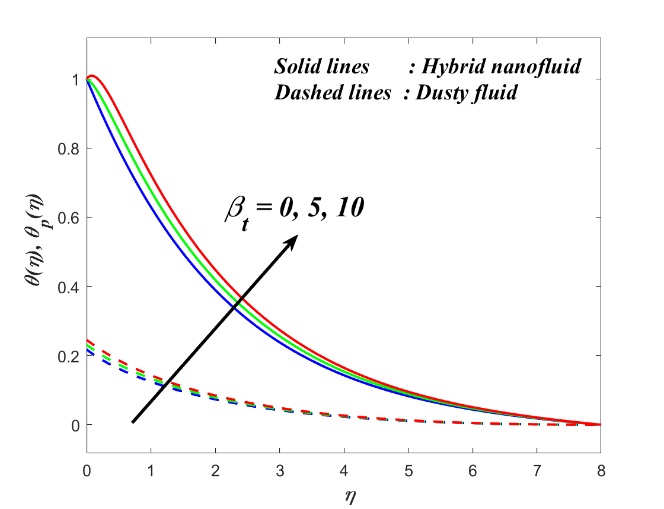
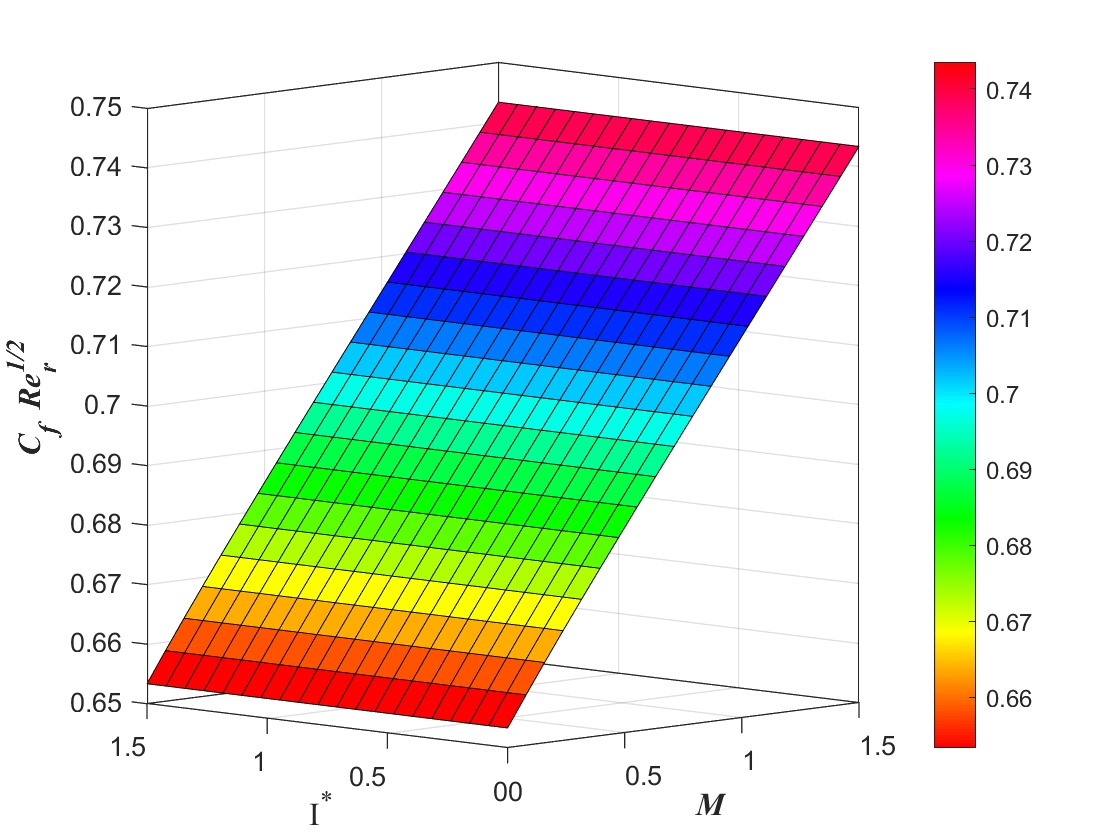
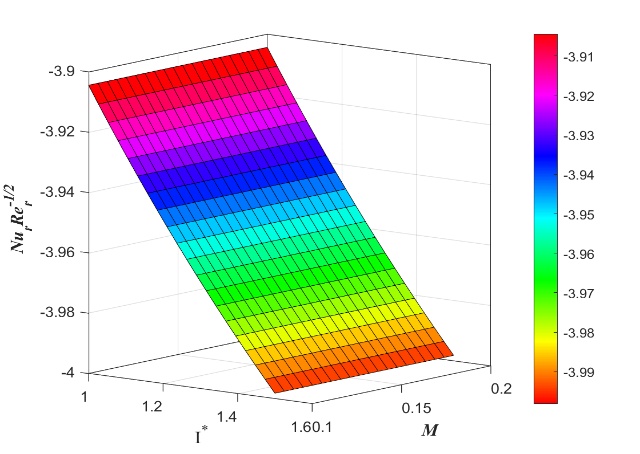
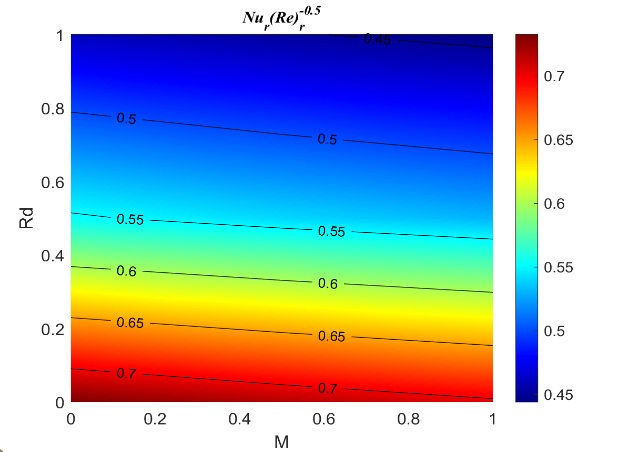
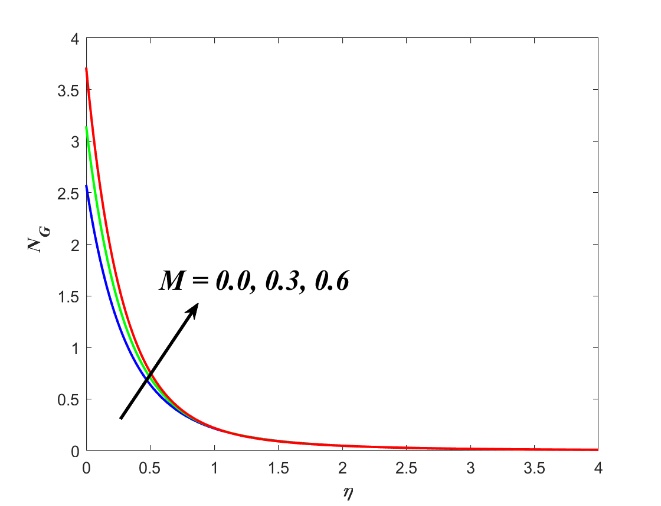
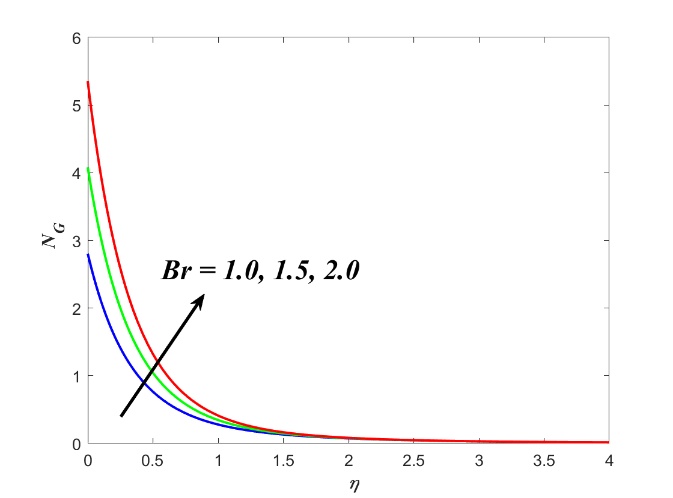
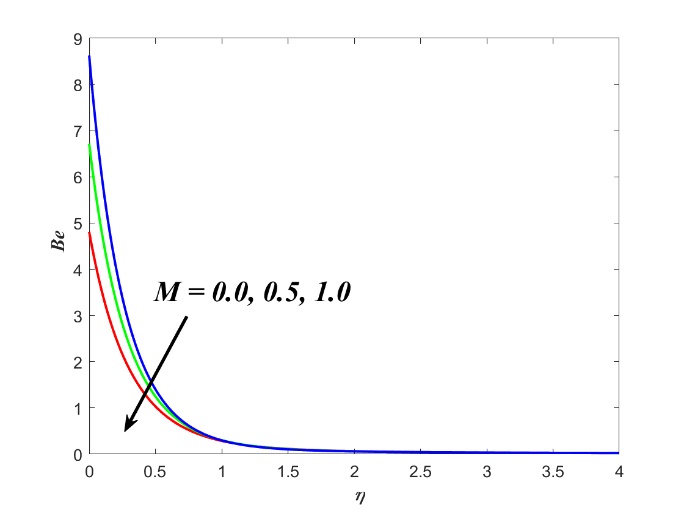
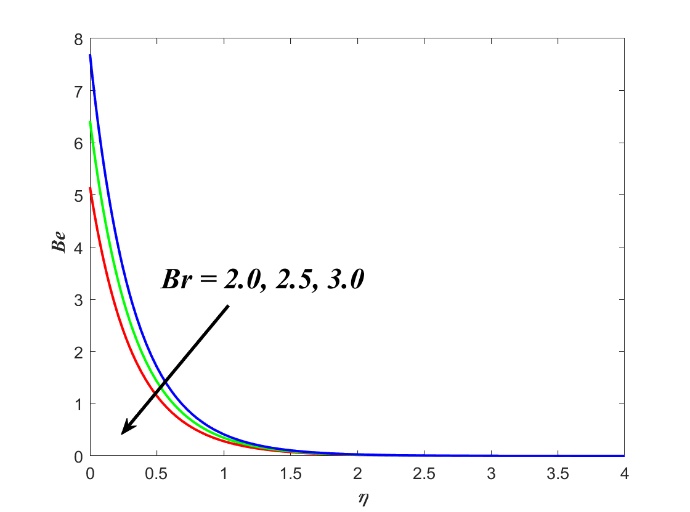
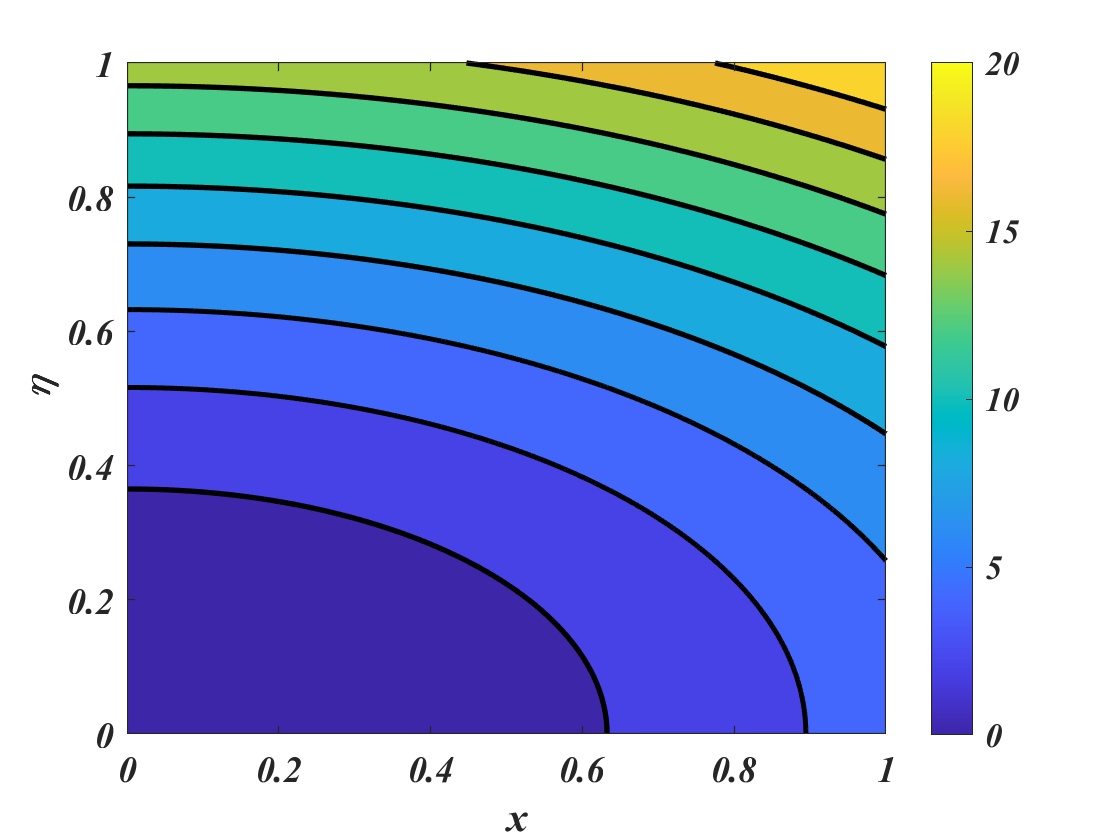
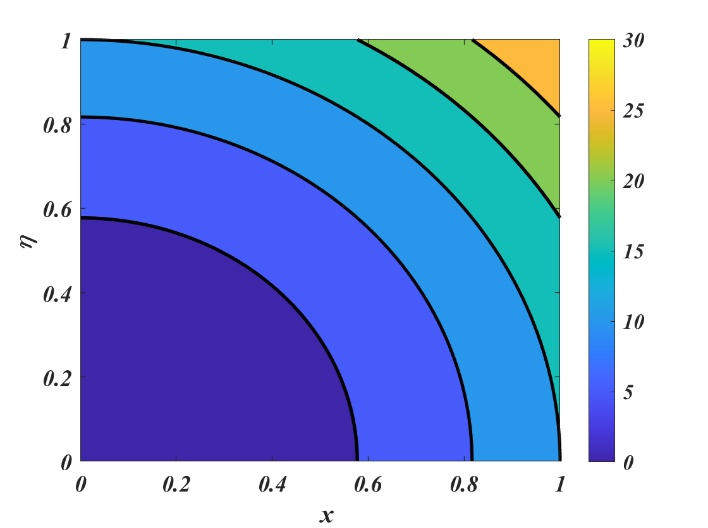
Fig. 15 shows the effect that the M parameter has on the contour of the entropy generation. The entropy generation profile improves as the values of M are increased to higher concentrations. From a strictly physical point of view, a rise in M results in an increase in the rate at which entropy is formed. This is because of the high friction that is induced by the higher Lorentz force. On the other hand, we observed the opposite behavior on the Be profile, which is seen in Fig. 17. Fig 16 demonstrates that the rate of entropy generation outline increases for increasing Br values. This scenario in the results of the entropy production rate is due to the strengthening of viscous effects with the rise in the Brinkman number, although the contradictory nature we detected on the Bejan number profile which is presented in Fig 18. Figs 19 and 20 demonstrations the M=1, 2 influences on streamlines. Magnetic parameter strength draws electrical conductivity molecules more towards the top. When M is small, the magnetic field is weaker, so the Lorentz force (the resistive electromagnetic force) acting on the conducting fluid is limited. As a result, the flow remains energetic and faster, and convective transport dominates.
CONCLUSION
A numerical solution for MHD flow on Dar-cy-Forchheimer flow on a stretched sheet was investigated in the previous research project that was being conducted. The problem of velocity and temperature was solved by using the numeri-cal approach, which is known as Bvp4c. The re-sult was a solution that was actually applicable to the model. The purpose of this kind of research is to an aircraft engine has a number of duties that are performed by engine oil. These functions in-clude lubrication, cooling, maintenance, prevent-ing corrosion, and reducing noise. Lubrication is the matter of utmost significance. In the absence of lubrication, it is the natural course of events that all moving parts would quickly escape. The findings are displayed in a number of different graphical styles, such as streamlines, surface plots in three dimensions, and a two-dimensional plot. The research produced a number of interesting findings, which are listed below:
Increasing levels of the magnetic field and porosity parameter cause a reduction in the velocity outline.
In the process of enhancing the radiation parameter, the temperature profile saw a significant improvement.
The skin friction factor slowly increased for the larger values of the parameter.
The Nu profile enhances, for the increasing values of the Rd.
Streamlines have an oscillating character, which is necessary for magnifying the magnetic field parameter.

